
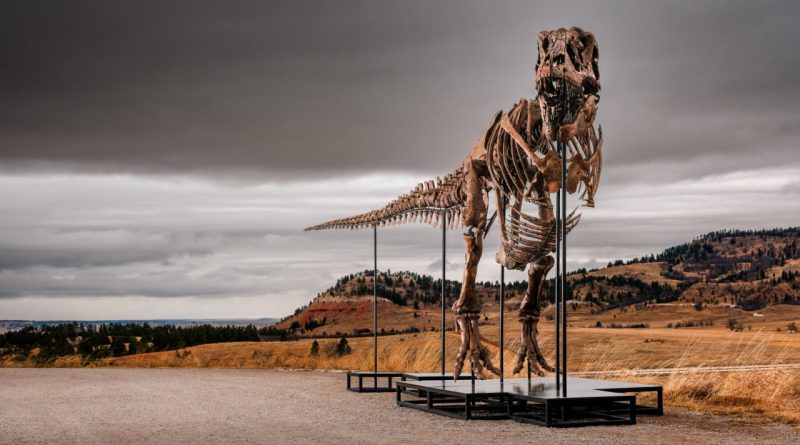
Tyrannosaurus Rex Skeleton Sold at Auction for Record-Breaking $50.1 Million
In a historic moment for paleontological auctions, a remarkably preserved Tyrannosaurus rex skeleton has been sold for an unprecedented $50.1 million, shattering previous records for dinosaur fossil sales. The massive specimen, measuring approximately 11.6 meters (38 feet) in length and standing over 3.6 meters (12 feet) tall, represents one of the most complete and impressive T. rex fossils ever to come to market. This extraordinary sale has reignited debates within the scientific community about the commercialization of prehistoric specimens and their accessibility for research purposes.
A Prehistoric Giant Returns to the Spotlight
The Tyrannosaurus rex, often referred to as the “king of the dinosaurs,” roamed North America approximately 68 to 66 million years ago during the late Cretaceous period. These apex predators were among the largest land carnivores to ever exist, with powerful jaws capable of delivering bone-crushing bites estimated at over 12,000 pounds of force. Scientists believe that T. rex could consume up to 500 pounds of meat in a single bite, making them the undisputed rulers of their prehistoric ecosystem. The specimen sold at auction showcases the magnificent scale of these creatures, with its imposing dimensions providing a visceral reminder of the dinosaur’s dominance during the Mesozoic Era.
The fossil market has seen remarkable growth over the past few decades, with wealthy collectors and institutions competing for rare specimens. This particular sale surpasses the previous record set in 2020 when a T. rex named “Stan” sold for $31.8 million at Christie’s auction house. Before that, the famous “Sue” skeleton was purchased by Chicago’s Field Museum for $8.4 million in 1997, a price that seemed astronomical at the time but now appears modest in comparison to current market valuations.
The Science Behind the Sale
The completeness and preservation quality of dinosaur fossils significantly impact their market value. T. rex specimens are exceptionally rare, with fewer than 50 substantial skeletons discovered since the species was first identified in 1905 by paleontologist Henry Fairfield Osborn. The fossilization process requires precise geological conditions, including rapid burial in sediment and specific mineral-rich environments that allow bones to be replaced by stone over millions of years. Each T. rex fossil that survives this process and is subsequently discovered represents an invaluable window into prehistoric life.
Preservation and Scientific Value
Beyond mere dimensions, scientists and collectors evaluate fossils based on bone completeness, surface detail preservation, and the presence of rare features such as skin impressions or stomach contents. The sold specimen reportedly exhibits exceptional preservation across multiple skeletal regions, including the skull, which is often the most sought-after and scientifically valuable component. T. rex skulls alone have sold for millions of dollars due to their rarity and the insights they provide into the dinosaur’s sensory capabilities, feeding behavior, and evolutionary adaptations.
Controversy and Conservation Concerns
The record-breaking sale has intensified ongoing debates about whether important paleontological specimens should be available for private purchase. Many scientists argue that fossils sold to private collectors are effectively lost to research, as they may become inaccessible to academic study. Professional paleontological organizations have long advocated for keeping significant specimens in public institutions where they can be studied, preserved, and displayed for educational purposes. The Society of Vertebrate Paleontology has expressed concerns that high auction prices incentivize commercial fossil hunting, which can sometimes damage sites and compromise scientific data that proper excavation techniques would preserve.
However, supporters of the fossil trade argue that private collectors often donate or loan specimens to museums, and that commercial interest in paleontology funds excavation work that might otherwise go unfunded. Some auction houses have also implemented policies requiring that scientifically significant fossils be made available for research, attempting to balance commercial interests with scientific access. The identity of the buyer in this record sale has not been publicly disclosed, leaving questions about the specimen’s future accessibility unanswered for now.