
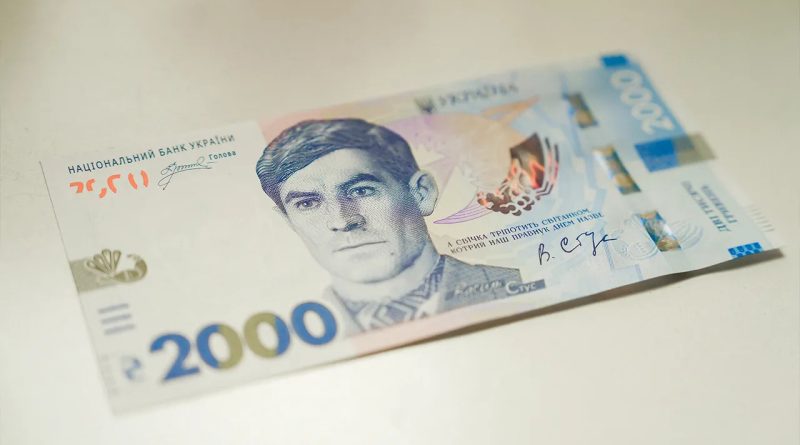
National Bank of Ukraine to Redesign 2000 Hryvnia Banknote Amid Font Controversy
The National Bank of Ukraine (NBU) has announced plans to update the design of the 2000 hryvnia banknote following public controversy surrounding the font used on the currency. NBU Governor Andriy Pyshnyy addressed allegations that the typeface was “stolen,” firmly rejecting such claims while simultaneously confirming that the font will be replaced. The decision comes as part of efforts to distance Ukrainian currency from any associations with work created by a Russian citizen, reflecting the broader cultural and political tensions between the two nations amid the ongoing war.
The Font Controversy Explained
The controversy erupted when observers noticed similarities between the font used on the 2000 hryvnia note and typefaces created by designers with connections to Russia. In the current geopolitical climate, any association between Ukrainian state symbols and Russian creators has become extremely sensitive. Governor Pyshnyy was quick to defend the NBU’s practices, categorically denying that any intellectual property theft had occurred. According to his statement, all proper licensing procedures were followed during the banknote’s design process, and the bank operated within legal boundaries.
However, the technical legality of the font usage has become secondary to the symbolic implications. Ukrainian society has increasingly demanded the removal of Russian cultural influences from all aspects of public life since the full-scale invasion began in February 2022. This extends to everything from street names and monuments to literature and now, apparently, typography on national currency. The NBU’s decision to change the font, despite maintaining its legal right to use it, demonstrates the institution’s sensitivity to public sentiment and national identity concerns.
Historical Context of Ukrainian Currency Design
The 2000 hryvnia banknote holds special significance in Ukrainian monetary history. It is the highest denomination note in circulation and features the portrait of Mykhailo Hrushevsky, a prominent Ukrainian historian, politician, and statesman who served as the Chairman of the Central Rada (parliament) during Ukraine’s brief period of independence from 1917 to 1918. The note was first introduced in 2019 to facilitate larger cash transactions and reduce the physical volume of currency needed for significant purchases.
Ukrainian currency design has evolved considerably since the hryvnia was introduced in 1996, replacing the transitional karbovanets that had been used following independence from the Soviet Union. Each denomination tells a story of Ukrainian identity, featuring historical figures, architectural landmarks, and cultural symbols. The design process involves collaboration between artists, historians, and security experts to create notes that are both aesthetically meaningful and resistant to counterfeiting. Any changes to these designs, even seemingly minor ones like font modifications, require careful consideration and testing.
Broader Derussification Efforts
The font replacement on the 2000 hryvnia note is part of a much larger derussification campaign that has accelerated dramatically since 2022. Ukrainian institutions across all sectors have been systematically reviewing their practices, partnerships, and even aesthetic choices to eliminate Russian influence. Cities have renamed hundreds of streets that previously honored Russian historical figures or Soviet-era names. Libraries have removed Russian-language books by authors who support the invasion. Television and radio stations have dramatically reduced Russian-language content.
This cultural shift extends to the business sector as well, where companies have rebranded products, changed suppliers, and severed ties with Russian partners. The movement represents not merely a reaction to the current conflict but a fundamental reassessment of Ukrainian identity that many argue was long overdue. For decades, critics say, Russian cultural hegemony was normalized in Ukraine, suppressing authentic Ukrainian expression. The current derussification efforts are thus seen by many as a reclamation of national identity rather than simple wartime antagonism.
Technical and Security Implications
Changing a banknote’s design, even partially, is not a simple undertaking. The NBU must ensure that any new font meets stringent security requirements, as typography plays a role in anti-counterfeiting measures. The modified notes must be easily distinguishable as authentic while remaining consistent enough with existing currency to avoid public confusion. Both old and new versions will likely circulate simultaneously for an extended period, requiring public education campaigns to prevent concerns about validity.
The NBU has not yet announced a specific timeline for implementing the changes or revealed what the new font will look like. Currency experts suggest that the redesign process could take several months to complete, factoring in design finalization, security testing, and production setup. The bank is expected to release more details in the coming weeks as the project progresses toward implementation.