
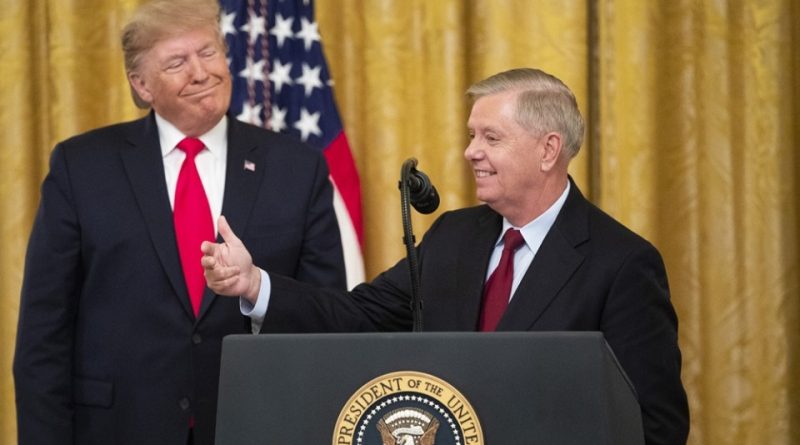
Trump Urges Senate to Pass Cryptocurrency Legislation in Honor of Lindsey Graham
In a significant political move that intertwines personal tribute with legislative agenda, former President Donald Trump has called upon the United States Senate to approve the Clarity Act, a comprehensive cryptocurrency regulatory framework. Trump’s appeal carries an unusual personal dimension, as he has framed the passage of this legislation as an honor to Senator Lindsey Graham, the longtime South Carolina Republican who has been a prominent figure in conservative politics for decades.
The announcement underscores the growing importance of cryptocurrency regulation in American political discourse, as digital assets continue to gain mainstream adoption while operating in what many consider a regulatory gray zone. Trump’s endorsement of the Clarity Act represents a notable shift in the political landscape surrounding digital currencies, which have historically faced skepticism from traditional financial institutions and regulatory bodies alike.
Understanding the Clarity Act and Its Implications
The Clarity Act represents one of the most ambitious attempts to establish a comprehensive regulatory framework for the cryptocurrency market in the United States. The legislation aims to provide clear guidelines for how digital assets should be classified, traded, and taxed, addressing long-standing concerns from both industry participants and consumer protection advocates. Currently, the American cryptocurrency market operates under a patchwork of regulations from multiple agencies, including the Securities and Exchange Commission and the Commodity Futures Trading Commission, creating confusion and uncertainty for businesses and investors.
Industry experts have long argued that regulatory clarity is essential for the cryptocurrency sector to reach its full potential. Without clear rules, many legitimate businesses have struggled to operate effectively, while bad actors have exploited regulatory gaps to defraud consumers. The Clarity Act seeks to establish definitive boundaries between securities and commodities in the digital asset space, potentially resolving years of jurisdictional disputes between federal agencies. This distinction is crucial because it determines which regulatory body oversees different types of cryptocurrencies and the compliance requirements that apply to each.
Market Impact and Industry Response
The cryptocurrency industry has generally welcomed efforts to establish clearer regulations, viewing them as a pathway to greater institutional adoption and mainstream acceptance. Major cryptocurrency exchanges and blockchain companies have spent millions of dollars lobbying for sensible regulatory frameworks that protect consumers without stifling innovation. If passed, the Clarity Act could position the United States as a global leader in cryptocurrency regulation, potentially attracting businesses and investment that might otherwise flow to more crypto-friendly jurisdictions like Singapore, Switzerland, or the United Arab Emirates.
Senator Lindsey Graham’s Political Legacy
Senator Lindsey Graham has served in the United States Senate since 2003, following six years in the House of Representatives. Throughout his career, Graham has been known for his expertise in foreign policy and national security matters, serving on the Senate Armed Services Committee and the Judiciary Committee. While not traditionally associated with cryptocurrency policy, Graham has been a vocal supporter of financial innovation and has maintained close political ties with Trump despite occasional public disagreements.
The decision to honor Graham through this legislative push reflects the complex dynamics of Republican politics and the importance of personal relationships in advancing policy agendas. Graham has been one of Trump’s most consistent allies in the Senate, providing crucial support during impeachment proceedings and other politically challenging moments. This public tribute suggests a deepening of their political alliance and may signal Graham’s potential involvement in future cryptocurrency policy discussions.
The Broader Context of Crypto Regulation in America
The push for cryptocurrency legislation comes at a pivotal moment for the digital asset industry. Following the collapse of several major cryptocurrency platforms in recent years, including the dramatic implosion of FTX and its founder Sam Bankman-Fried’s subsequent criminal conviction, calls for regulatory oversight have intensified. These failures resulted in billions of dollars in losses for retail investors and highlighted the risks of an inadequately regulated market. Congressional action has been slow, with previous legislative attempts stalling amid partisan disagreements and industry lobbying.
Looking ahead, the fate of the Clarity Act will depend on building bipartisan support in a deeply divided Senate. Proponents argue that clear regulations will protect consumers, promote innovation, and maintain American competitiveness in the global digital economy. Critics, however, worry that overly prescriptive rules could drive cryptocurrency businesses overseas or stifle the technological innovation that has made the sector so dynamic. As the debate continues, Trump’s endorsement adds significant political weight to the conversation and may accelerate legislative action in the months ahead.