
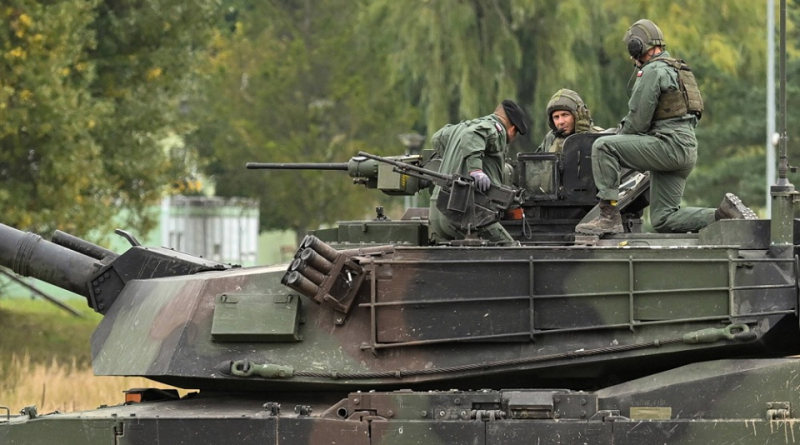
Poland Becomes First EU Country to Receive Payment Under SAFE Defense Loan Program
The European Union has taken a significant step forward in its collective defense strategy by initiating payments under its new Security Action For Europe (SAFE) lending program. Poland has emerged as the pioneering recipient of these funds, marking a historic moment in European defense cooperation. This development signals the EU’s growing commitment to strengthening its military capabilities amid escalating geopolitical tensions on the continent and the changing dynamics of transatlantic security relationships.
The SAFE program represents a fundamental shift in how the European Union approaches defense financing.
For decades, military spending remained largely a national prerogative, with member states independently managing their defense budgets and procurement decisions. However, the ongoing conflict in Ukraine and concerns about long-term American commitment to European security have accelerated discussions about collective European defense mechanisms. The SAFE initiative allows EU member states to access favorable loan terms for defense investments, effectively pooling financial resources to achieve better rates and coordinated purchasing power.
Poland’s position as the first beneficiary of SAFE funds is particularly symbolic given the country’s geographical location and its recent transformation into one of NATO’s most militarily significant eastern flank nations. Since Russia’s full-scale invasion of Ukraine in February 2022, Poland has dramatically increased its defense spending, currently allocating approximately 4% of its GDP to military purposes — the highest ratio among NATO members. The country has embarked on an ambitious modernization program that includes acquiring advanced fighter jets, main battle tanks, artillery systems, and sophisticated air defense networks. This SAFE payment will support Poland’s continuing efforts to build one of Europe’s most formidable conventional military forces.
The timing of this disbursement reflects broader European anxieties about the continent’s defense posture. European officials have increasingly acknowledged that the era of relying primarily on American military protection may be evolving. This realization has prompted unprecedented discussions about European strategic autonomy and the need for the continent to develop more independent defense capabilities. The SAFE program fits into this larger framework, providing a financial mechanism that encourages member states to invest in their militaries while benefiting from EU-level coordination and support.
Defense industry experts have noted that programs like SAFE could fundamentally reshape European military procurement patterns. By providing access to EU-backed financing, smaller member states that might otherwise struggle to afford significant military modernization can now participate more fully in collective defense efforts. This democratization of defense spending could lead to more standardized equipment across European armies, improving interoperability and reducing the logistical challenges that have historically complicated joint operations. Additionally, the program may stimulate European defense manufacturing, as member states are encouraged to purchase equipment from European suppliers when possible.
The geopolitical ramifications of this development reach far beyond European boundaries. As the EU creates more advanced mechanisms for collective defense financing, it establishes itself as an increasingly competent security player on the global stage. This transformation may affect relationships with other major powers and alter alliance dynamics within NATO. Certain analysts propose that a more robust European defense pillar could actually reinforce the transatlantic alliance by establishing a more equitable partnership, while others express concern about possible duplication of efforts or diverging strategic priorities between European and American defense planning.
Moving forward, the successful execution of SAFE in Poland will likely motivate other EU member states to seek similar financing arrangements. Nations in Central and Eastern Europe, many of which share Poland’s concerns regarding regional security, are anticipated to be especially interested in accessing these funds. The European Commission has signaled that the program will grow as additional countries submit qualifying defense investment proposals. As Europe continues adapting to new security realities, financial instruments like SAFE represent a tangible expression of the continent’s commitment to assuming greater responsibility for its own defense while preserving the cooperative frameworks that have supported European peace and prosperity for generations.