
Nvidia CEO Jensen Huang Sees Market Selloff as Buying Opportunity: ‘You Should Be Happy’
A Contrarian View on Market Turbulence
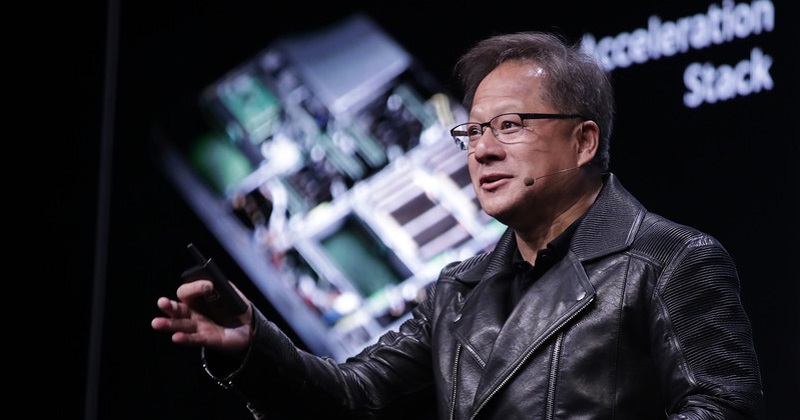
In a striking display of confidence amid market turbulence, Nvidia CEO Jensen Huang has characterized the recent sharp decline in technology stock prices as a golden opportunity for investors looking to acquire shares at discounted valuations. The veteran tech executive’s optimistic outlook comes at a time when many investors are grappling with uncertainty and volatility across global financial markets, particularly in the semiconductor and artificial intelligence sectors that have driven much of the market’s gains in recent years.
Huang’s comments reflect a contrarian investment philosophy that has historically rewarded patient investors who maintain conviction during periods of market stress. Rather than viewing the selloff as a harbinger of deeper troubles, the Nvidia chief suggested that the declining share prices of fundamentally strong technology companies represent attractive entry points for those with longer investment horizons. His perspective echoes the famous advice attributed to legendary investor Warren Buffett: be greedy when others are fearful.
The technology sector has experienced significant pressure in recent months due to a confluence of factors including rising interest rates, geopolitical tensions, and concerns about the sustainability of artificial intelligence-driven valuations. Nvidia itself, despite being one of the most celebrated beneficiaries of the AI boom, has seen its stock price fluctuate dramatically as investors reassess growth expectations and profit-taking accelerates. The company’s market capitalization, which at various points has exceeded three trillion dollars, making it one of the world’s most valuable corporations, has been subject to intense scrutiny from both bulls and bears on Wall Street.
Huang’s Track Record Through Market Cycles
Jensen Huang’s journey from co-founding Nvidia in 1993 to leading it through multiple technological revolutions provides context for his measured response to market volatility. The Taiwan-born executive has navigated the company through the transition from gaming graphics cards to cryptocurrency mining hardware and now to the epicenter of the artificial intelligence revolution. Under his leadership, Nvidia’s graphics processing units have become the de facto standard for training and running large language models and other AI applications, giving the company an estimated 80 to 90 percent market share in AI accelerator chips.
Historical market data backs up the idea that major selloffs in high-quality technology stocks frequently come before significant recoveries. Throughout the 2008 financial crisis, the 2020 pandemic crash, and the 2022 tech correction, investors who bought shares of top technology companies during times of extreme pessimism were often rewarded with exceptional returns in the following years. Nevertheless, financial analysts warn that past performance is no guarantee of future results, and today’s market conditions pose distinct challenges including ongoing inflation worries and shifting competitive forces in the semiconductor industry.
Implications for the AI Industry
The broader implications of Huang’s statement extend beyond Nvidia to the entire technology ecosystem that depends on continued investment in AI infrastructure. Major cloud computing providers including Microsoft, Amazon, and Google have committed tens of billions of dollars to building data centers powered by Nvidia’s chips. Any sustained downturn in technology valuations could potentially impact capital expenditure plans and slow the pace of AI development across the industry. Nevertheless, demand for AI computing power shows no signs of abating, with enterprises across sectors from healthcare to finance racing to implement generative AI solutions.
What This Means for Investors
Market strategists are split on whether the current selloff constitutes a temporary correction or marks the start of a more extended downturn. Some cite elevated price-to-earnings ratios in the technology sector as proof that additional declines may be needed before valuations reach historical averages. Others contend that the revolutionary potential of artificial intelligence warrants premium valuations for companies leading this technological transformation. Huang’s confident position indicates he clearly falls into the latter group, wagering that Nvidia’s commanding market position and strong demand for AI infrastructure will ultimately prove current investors right.
For retail investors weighing whether to follow Huang’s implicit advice, financial advisors recommend careful consideration of individual risk tolerance, investment timelines, and portfolio diversification. While the Nvidia CEO’s track record of building shareholder value over three decades lends credibility to his optimism, investing in volatile technology stocks requires the ability to withstand potentially significant short-term losses. As markets continue to digest macroeconomic data and corporate earnings reports, Huang’s bullish perspective serves as a reminder that market downturns, however painful, have historically been followed by recoveries that reward those with patience and conviction.