
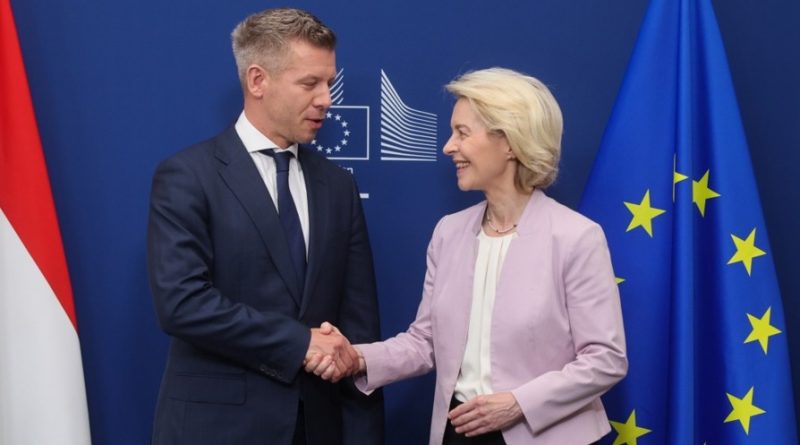
Major Victory for Hungary: EU Unblocks €16.4 Billion Frozen Over Orbán’s Policies
In a dramatic shift that signals transformative changes in Central European politics, the European Commission has announced it will unblock €16.4 billion in frozen funds for Hungary. European Commission President Ursula von der Leyen declared there is a “strong wind of change across Hungary” following recent political developments that have reshaped the country’s government. This decision marks one of the most significant financial reversals in EU-member state relations in recent years and comes after years of contentious disputes between Brussels and Budapest.
Background: Why the Funds Were Frozen
The funds had been frozen since 2022 as part of the EU’s rule-of-law mechanism, a tool designed to protect the bloc’s financial interests by linking access to EU funds with adherence to democratic principles and judicial independence. Hungary under Viktor Orbán’s leadership had faced persistent criticism from European institutions over concerns about media freedom, judicial reforms, corruption, and the treatment of minorities and LGBTQ+ communities. The European Commission had repeatedly cited these issues as justification for withholding substantial portions of Hungary’s allocated cohesion funds and recovery money.
The choice to unfreeze these funds marks a striking shift in EU-Hungary relations, which had worsened considerably over the previous decade. Viktor Orbán, Hungary’s Prime Minister for almost 15 uninterrupted years beginning in 2010, had repeatedly come into conflict with Brussels on matters from migration policy to judicial independence. His government’s close relationship with Russia, especially after the invasion of Ukraine in 2022, had additionally strained ties with Western European allies. Orbán had consistently blocked or held up EU sanctions targeting Russia and military assistance packages for Ukraine, impeding unified European responses to the security crisis along the continent’s eastern frontier.
Political Changes That Led to the Decision
The political landscape in Hungary has undergone substantial changes that evidently satisfied European Commission requirements for releasing the frozen funds. While specific details of the governmental transition remain complex, the EU’s willingness to unblock such a massive sum indicates that Brussels believes meaningful reforms are now underway or have been credibly promised. The €16.4 billion package includes both cohesion funds designed for regional development and infrastructure projects, as well as portions of Hungary’s allocation from the EU’s pandemic recovery fund, officially known as the Recovery and Resilience Facility.
The EU’s Rule-of-Law Mechanism
Historically, the EU’s rule-of-law mechanism represents a relatively new tool in the bloc’s arsenal for ensuring member states adhere to fundamental European values. First proposed in 2018 and formally adopted in 2020, the mechanism allows the Commission to recommend suspending EU budget payments to countries where rule-of-law breaches risk affecting the sound financial management of the EU budget. Hungary became the first country to face such measures, followed by concerns raised about Poland under its previous government. The Polish situation was largely resolved following elections in 2023 that brought a more pro-European coalition to power under Donald Tusk.
Economic Impact and Future Implications
The release of funds is expected to have significant economic implications for Hungary, which has faced considerable fiscal pressures in recent years. The country’s economy has struggled with high inflation, energy costs, and reduced foreign investment partly attributed to uncertainty surrounding EU fund disbursements. Economic analysts suggest that the injection of €16.4 billion could provide substantial stimulus for infrastructure development, digital transformation projects, and green energy initiatives that have been delayed due to the funding freeze. Hungarian citizens and businesses may see tangible benefits through improved roads, modernized public services, and enhanced connectivity.
The European Commission’s ruling also has wider ramifications for EU governance and how effective its conditionality tools prove to be. Detractors of the rule-of-law mechanism had contended it constituted Brussels exceeding its authority over member state sovereignty, whereas proponents insisted it was vital for safeguarding European taxpayers’ funds and democratic principles. The Hungarian situation shows that the mechanism can yield outcomes, although questions persist regarding consistency in its use and the particular reforms needed to unlock funding. As the EU continues addressing challenges such as the conflict in Ukraine, economic strains, and forthcoming enlargement talks, the Hungary precedent will probably shape how Brussels handles comparable circumstances with other member states going forward.
Looking Ahead: New Opportunities for Cooperation
Moving forward, the restoration of normal EU-Hungary financial relations creates fresh opportunities for collaboration on urgent continental matters. The new Hungarian government will need to navigate the task of enacting whatever reforms were pledged to obtain the fund release while addressing domestic political expectations. For the European Union, the effective use of financial pressure to promote democratic reforms may bolster the bloc’s capacity to preserve unity and common values across its 27 member states amid a time of considerable geopolitical instability and internal change.