
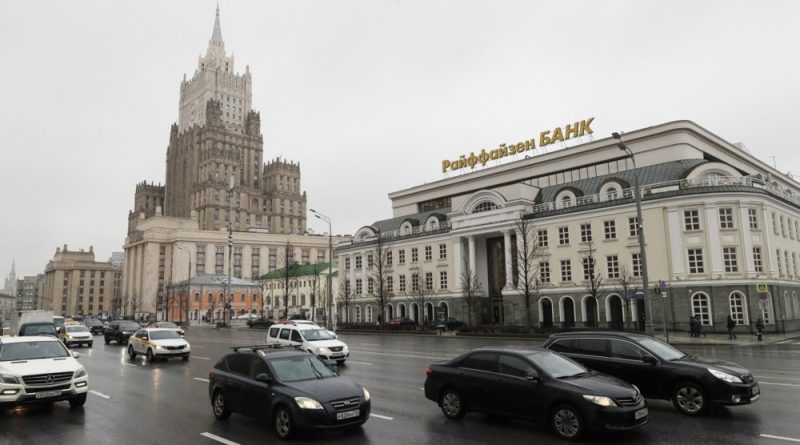
“It’s Not Just Leaving the Keys and Walking Away”: Raiffeisen Bank CEO on the Complex Exit from Russia
Natalia Gurina, the Chief Executive Officer of Raiffeisen Bank Russia, has stated that she sees no possibility of accelerating the Austrian banking group’s withdrawal from the Russian market. The statement underscores the extraordinary complexity facing Western financial institutions attempting to disentangle themselves from Russia amid ongoing geopolitical tensions and unprecedented sanctions regimes that have fundamentally altered the landscape of international banking.
The Complexity of Withdrawal
The CEO’s remarks highlight the intricate web of regulatory, financial, and operational challenges that make a rapid exit virtually impossible. “This is not simply a matter of leaving the keys and walking away,” Gurina emphasized, pointing to the multitude of stakeholders, contractual obligations, and regulatory requirements that must be carefully navigated. The bank continues to serve millions of Russian customers and employs thousands of staff, creating both moral and practical considerations that cannot be easily dismissed.
Raiffeisen Bank International has been under intense pressure from Western regulators, particularly the European Central Bank, to reduce its Russian operations since the beginning of the Ukraine conflict in February 2022. The ECB has repeatedly expressed concerns about the reputational and financial risks associated with maintaining significant exposure to the Russian economy. However, the Austrian parent company has found itself caught between competing pressures: Western demands for a swift exit and Russian regulatory obstacles that make such a departure extraordinarily difficult to execute.
A Legacy of Western Investment in Russia
The challenges facing Raiffeisen are emblematic of the broader predicament confronting Western businesses that established deep roots in Russia over the past three decades. Following the collapse of the Soviet Union, international corporations eagerly entered the Russian market, attracted by its vast natural resources, educated workforce, and consumer potential. Banks like Raiffeisen built substantial operations, becoming integral parts of Russia’s financial infrastructure. The sudden geopolitical rupture has left these institutions facing impossible choices, with no clear path forward that satisfies all stakeholders.
Russian Countermeasures and Asset Restrictions
Russian authorities have put their own countermeasures in place that essentially keep foreign capital locked inside the country. Companies looking to withdraw must frequently accept substantial discounts when selling assets, occasionally reaching as much as 50 percent below fair market value, while also navigating extended approval procedures through Russian government commissions. Furthermore, Moscow has issued threats to confiscate assets from companies that try to depart on terms it views as unfavorable, producing a deterrent effect on prospective deals. These actions have converted what could have been simple business choices into intricate geopolitical negotiations.
Financial Stakes and the Path Forward
Raiffeisen’s Russian subsidiary has historically been one of the most profitable units within the group, contributing significantly to the parent company’s bottom line. This financial success has complicated the exit calculus, as shareholders and analysts weigh the costs of departure against continued earnings. The bank has been gradually reducing its loan portfolio and limiting new business, but the process of unwinding decades of operations cannot happen overnight. Estimates suggest that a complete withdrawal could take several more years, assuming all parties cooperate—an assumption that appears increasingly uncertain given current geopolitical dynamics.
The situation has broader implications for the future of international business and the role of economic interdependence in maintaining global stability. The idea that deep commercial ties between nations would prevent conflict—a cornerstone of post-Cold War thinking—has been severely tested. Companies now face unprecedented decisions about how to balance profit motives against geopolitical realities, with Raiffeisen’s prolonged exit serving as a cautionary tale for future international expansion. As Gurina’s comments make clear, entering a market is far easier than leaving one, particularly when that departure occurs amid active conflict and competing regulatory demands.
Financial analysts suggest that Raiffeisen will likely continue its gradual wind-down strategy, reducing exposure where possible while managing the complex regulatory environment on both sides. The bank must maintain sufficient operational capacity to serve existing clients while simultaneously preparing for an eventual departure whose timeline remains uncertain. This delicate balancing act represents one of the most challenging corporate situations in modern banking history, with implications that will be studied for decades to come.