
Gold Surpasses U.S. Treasury Bonds to Become World’s Largest Reserve Asset
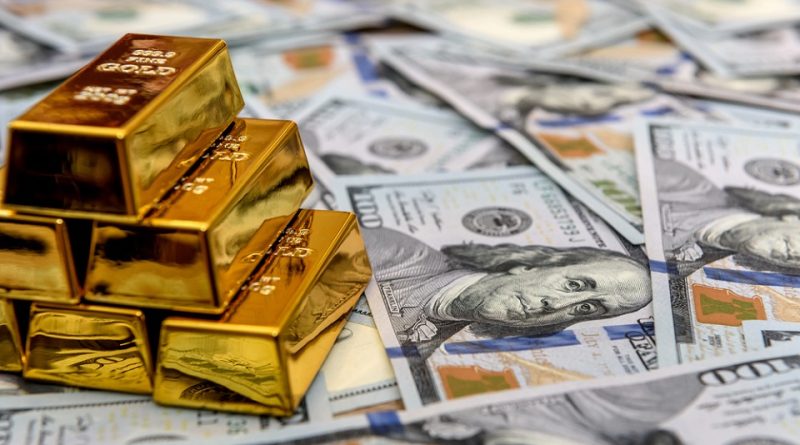
In a historic shift that signals profound changes in the global financial landscape, gold has officially overtaken United States Treasury bonds to become the world’s largest reserve asset. This remarkable transition, driven by escalating geopolitical tensions and unprecedented purchasing activity by central banks worldwide, marks a significant departure from the dollar-dominated financial order that has prevailed since the end of World War II.
The displacement of U.S.
government debt from its long-held position as the premier safe-haven asset represents more than just a statistical milestone. For decades, Treasury bonds have served as the backbone of the international monetary system, providing governments and institutions with a secure store of value backed by the full faith and credit of the world’s largest economy. The fact that a physical commodity with no yield has now surpassed these instruments speaks volumes about the current state of global confidence in traditional financial structures.
Central banks around the world have been the primary drivers of this transformation, accumulating gold at rates not seen in generations. According to data from the World Gold Council, central bank purchases have exceeded 1,000 tonnes annually for several consecutive years, with nations across Asia, the Middle East, and emerging markets leading the charge. China, Russia, India, and Turkey have been particularly aggressive in their acquisition strategies, viewing gold as a hedge against currency volatility and a means of reducing dependence on the U.S. dollar. Poland, Hungary, and other European nations have also significantly increased their gold reserves, citing concerns about economic uncertainty and the desire for greater monetary sovereignty.
The geopolitical motivations behind this gold rush cannot be understated. The imposition of sweeping Western sanctions on Russia following the 2022 invasion of Ukraine sent shockwaves through global financial markets, demonstrating that dollar-denominated assets could be frozen or seized as instruments of foreign policy. This weaponization of the financial system prompted many nations to reassess their exposure to assets that could potentially be restricted during periods of political conflict. Gold, with its physical nature and absence of counterparty risk, emerged as an attractive alternative that cannot be digitally frozen or confiscated by foreign governments.
Historical context adds important perspective to this development.
Gold served as the foundation of the international monetary system under the Bretton Woods agreement from 1944 until 1971, when President Richard Nixon ended the dollar’s convertibility to gold. Since then, the yellow metal has maintained its allure as a store of value despite no longer backing any major currency. The current resurgence represents something of a return to historical norms, as gold has served as money and a reserve asset for thousands of years across virtually every civilization. Central banks never entirely abandoned gold; even at its lowest point of popularity in the early 2000s, official institutions held approximately 30,000 tonnes globally.
Market analysts and economists have offered varied interpretations of this trend. Some view it as a prudent diversification strategy in an increasingly multipolar world, while others see it as a potential harbinger of declining confidence in U.S. fiscal management. The United States national debt has surpassed $34 trillion, with annual deficits consistently exceeding $1 trillion, raising questions about the long-term sustainability of Treasury securities as risk-free assets. Rising interest rates have also diminished the relative attractiveness of bonds, as their prices move inversely to yields, causing significant paper losses for holders of older, lower-yielding securities.
Gold’s rising prominence carries consequences that reach far beyond theoretical financial matters. For everyday consumers, persistent central bank purchasing could keep gold prices high, impacting everything from jewelry expenses to electronics production where gold serves as a component material. For governments, this transition may signal upcoming changes in international trade settlement methods and national foreign exchange reserve management. Certain experts believe this movement could speed up the creation of alternative payment networks outside the conventional dollar-centered framework, potentially dividing global finance into rival spheres of influence.
Looking ahead, the trajectory of gold’s dominance remains uncertain.
Much will depend on geopolitical developments, particularly relations between Western powers and major gold-accumulating nations like China. Monetary policy decisions by the Federal Reserve and other central banks will also play crucial roles, as will the broader trajectory of inflation and economic growth. What appears clear, however, is that the world’s reserve managers are voting with their purchases, and their message is unmistakable: in an era of heightened uncertainty and shifting power dynamics, the enduring appeal of gold has reasserted itself with remarkable force.