
€300 Million in Credits and Ukraine Facility: How Poland’s Largest Bank Subsidiary Is Financing Ukrainian Businesses
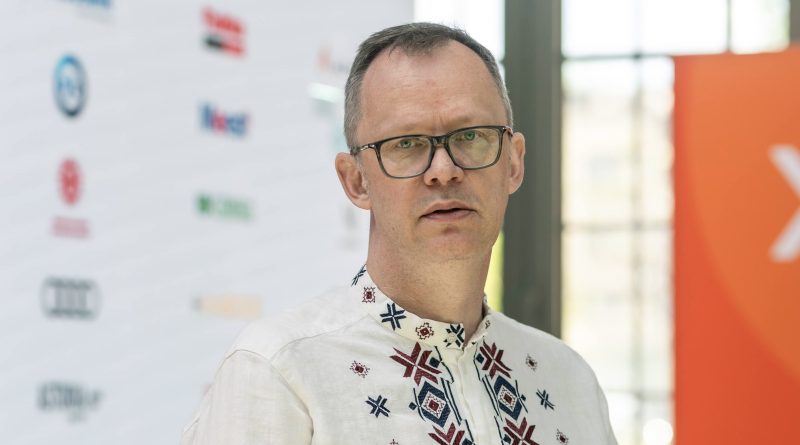
Kredobank, the Ukrainian subsidiary of PKO Bank Polski — Poland’s largest financial institution — has emerged as a significant player in channeling international financial support to Ukrainian businesses during one of the most challenging periods in the country’s history. In a recent interview, Yaroslav Beldovsky, Deputy Chairman of Kredobank’s Management Board, outlined the bank’s ambitious lending strategy and its role in distributing funds from the European Union’s Ukraine Facility program, which represents one of the largest financial assistance packages ever directed toward the war-torn nation.
The €300 Million Credit Portfolio
The €300 million credit portfolio that Kredobank is deploying represents a substantial commitment to Ukraine’s economic resilience. This funding comes at a critical time when many international financial institutions have scaled back their operations in the country due to ongoing security concerns and economic uncertainty. PKO Bank Polski’s decision to maintain and even expand its Ukrainian operations through Kredobank signals strong confidence in the country’s long-term economic prospects and demonstrates the strategic importance of Polish-Ukrainian financial cooperation.
The Ukraine Facility program, initiated by the European Union in 2024, constitutes a comprehensive four-year assistance package valued at roughly €50 billion aimed at supporting Ukraine in preserving macroeconomic stability, implementing essential reforms, and commencing reconstruction efforts while the conflict persists. Kredobank’s involvement in channeling these funds positions the institution at the heart of Ukraine’s economic recovery initiatives. The program specifically focuses on small and medium-sized enterprises, agricultural producers, and vital infrastructure projects that constitute the foundation of Ukraine’s wartime economy.
Eligibility and Priority Sectors
Eligibility for these credit facilities is extended primarily to businesses that exhibit sustainable operations and well-defined development strategies despite wartime circumstances. Agricultural enterprises have been especially active beneficiaries, considering Ukraine’s vital role as a global food supplier and the sector’s significance to the national economy. Manufacturing companies engaged in defense-related production, logistics firms maintaining supply chains, and technology companies creating solutions for reconstruction have likewise been given priority in the lending criteria established by Kredobank and its European partners.
Polish-Ukrainian Financial Partnership
The strategic partnership between PKO Bank Polski and its Ukrainian subsidiary reflects broader geopolitical and economic ties between Poland and Ukraine that have deepened significantly since Russia’s full-scale invasion began in February 2022. Poland has served as the primary transit hub for Western military and humanitarian aid flowing into Ukraine, and Polish financial institutions have played an increasingly important role in maintaining economic connectivity between Ukraine and the European Union. PKO Bank Polski, with assets exceeding €90 billion, brings substantial financial muscle and expertise to support Ukraine’s banking sector at a time when domestic capital remains constrained.
Beldovsky emphasized that Kredobank’s strategy in Ukraine extends beyond merely distributing European funds. The bank has maintained all of its branch operations throughout the country, including in regions closer to active combat zones, demonstrating an operational commitment that many competitors have been unable or unwilling to match. This physical presence has proven essential for serving business clients who require traditional banking services alongside access to international credit facilities. The bank has also invested significantly in digital infrastructure, enabling customers in areas with limited physical access to continue their banking relationships remotely.
Ukraine’s Banking Sector and Future Outlook
The broader context of Ukraine’s banking sector reveals both challenges and remarkable resilience. The National Bank of Ukraine has implemented strict capital controls and monetary policies to maintain financial stability, while Ukrainian banks collectively have continued to generate profits despite the extraordinary circumstances. International financial institution involvement, such as that of Kredobank and its Polish parent company, provides crucial foreign currency liquidity and helps maintain confidence in the Ukrainian financial system among international partners and investors who will be essential for post-war reconstruction.
Looking ahead, Kredobank’s leadership has indicated plans to expand its credit portfolio further as additional tranches of Ukraine Facility funding become available and as the country’s absorption capacity for investment grows. The integration of Ukrainian financial regulations with European Union standards — a process accelerated by Ukraine’s EU candidate status — creates new opportunities for cross-border financial services and positions institutions like Kredobank as bridges between Ukrainian businesses and European markets. This financial infrastructure will prove essential not only for immediate wartime needs but for the massive reconstruction effort that will eventually follow, estimated by the World Bank to require over $400 billion in investment over the coming decade.