
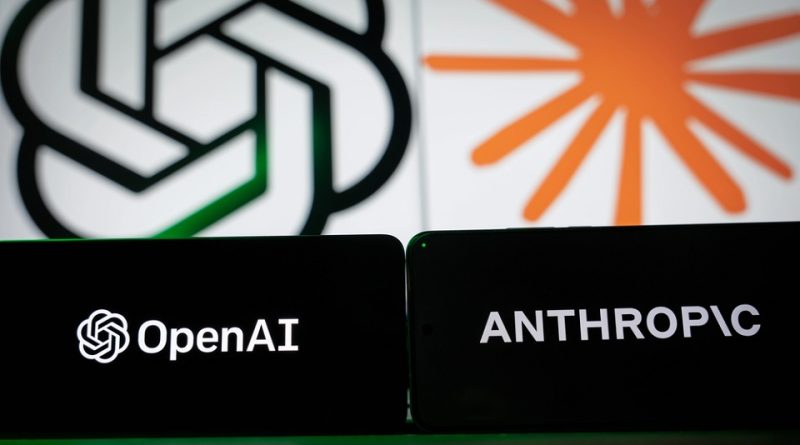
Anthropic Files for Stock Exchange Listing, Racing Ahead of OpenAI
In a move that could reshape the artificial intelligence industry’s financial landscape, Anthropic has officially filed paperwork to go public, potentially positioning itself to become one of the largest initial public offerings in technology history. The San Francisco-based AI safety company, currently valued as the most expensive artificial intelligence firm globally, is making its bid for public markets ahead of its primary competitor OpenAI, marking a significant milestone in the rapidly evolving AI sector.
Opting to go public marks a strategic shift for Anthropic, a company that has historically depended on private investment rounds from leading technology backers. Established in 2021 by Dario and Daniela Amodei, who previously worked at OpenAI, the firm has secured significant support from major industry players such as Google and Amazon, with Amazon pledging up to $4 billion in funding. This transition to public markets demonstrates confidence in the company’s business approach and its primary offering, Claude, an AI assistant that rivals OpenAI’s ChatGPT.
Anthropic’s filing comes at an especially significant moment considering the current landscape of the AI sector. Although OpenAI has captured most attention with its ChatGPT platform and Microsoft collaborations, Anthropic has steadily established itself as a leader in AI safety and ethical development. The firm’s constitutional AI methodology, designed to build systems that are helpful, harmless, and honest, has gained traction among enterprise clients and governmental bodies worried about the potential dangers of deploying artificial intelligence.
Market analysts suggest that Anthropic’s IPO could value the company at well over $60 billion, potentially making it one of the largest technology offerings since the dot-com era. The AI sector has experienced unprecedented growth, with global investments in artificial intelligence companies exceeding $100 billion in recent years. This surge reflects growing corporate demand for AI solutions across industries ranging from healthcare and finance to manufacturing and entertainment.
Historically, technology IPOs of this magnitude have served as bellwethers for broader market sentiment.
The successful public offerings of companies like Google in 2004, Facebook in 2012, and more recently, semiconductor firms capitalizing on AI demand, have demonstrated investor appetite for transformative technology companies. However, the AI sector presents unique challenges, including intense competition, significant infrastructure costs, and ongoing regulatory scrutiny that could impact valuations and long-term growth prospects.
The race between Anthropic and OpenAI extends beyond product development into the financial arena. OpenAI, backed by Microsoft with investments totaling approximately $13 billion, has reportedly been considering its own transition from a non-profit structure to a for-profit entity, potentially paving the way for a future public offering. By filing first, Anthropic may gain a crucial advantage in attracting public market investors eager to participate in the AI revolution before the market becomes saturated with similar offerings.
Industry experts note that Anthropic’s emphasis on AI safety could prove to be a differentiating factor with institutional investors increasingly focused on environmental, social, and governance criteria. The company has published extensive research on reducing AI risks and has advocated for industry-wide safety standards. This positioning may appeal to pension funds, sovereign wealth funds, and other large investors seeking exposure to AI while managing reputational and regulatory risks.
Throughout the IPO proceedings, industry observers will pay close attention to regulatory reactions, competitive forces, and general economic factors that may affect the offering’s outcome. The results will probably carry significant consequences not just for Anthropic and its financial backers but for the broader artificial intelligence sector, potentially establishing standards for how AI companies are valued in the future and shaping public market expectations during this pivotal technological period.